
Nigeria’s proposed legislation requiring major social media platforms and other digital service providers to establish physical offices in the country has cleared another legislative hurdle, although concerns over its enforcement powers continue to divide supporters and critics.
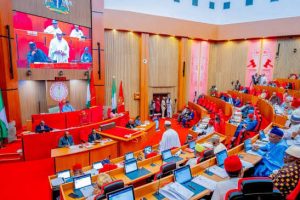
The bill, which seeks to amend the Nigeria Data Protection Act 2023, advanced following a public hearing organised by the Senate Committee on ICT and Cyber Security on Wednesday, July 22, 2026. The proposal had earlier passed its second reading in the Senate in March 2025 but must still secure a third reading, gain approval from the House of Representatives, and receive presidential assent before becoming law.
If enacted, the legislation would require social media platforms, data controllers, and data processors operating in Nigeria to establish and maintain a physical presence in the country. Companies expected to be affected include Meta, which owns Facebook, Instagram, and WhatsApp, as well as Google, YouTube, TikTok, X, and Snapchat.
The bill’s sponsor, Senator Ned Nwoko, argued during the hearing that companies serving millions of Nigerians and generating revenue from the country should maintain local offices and engage more directly with regulators, businesses, and users.
Proponents of the proposal said a local presence would improve regulatory oversight, strengthen compliance with Nigerian laws, create jobs, and encourage greater investment in the country’s digital economy. They also argued that dealing with companies managed from regional offices outside Nigeria often slows regulatory enforcement and dispute resolution.
However, the bill has attracted criticism from rights advocates, particularly over a provision that would empower the Nigeria Data Protection Commission (NDPC) to suspend or prohibit the operations of platforms that fail to establish a Nigerian office within 30 days.
The Socio-Economic Rights and Accountability Project (SERAP), in a letter to the National Assembly on July 18, urged lawmakers to withdraw the bill, arguing that the proposal could become “a backdoor attempt to regulate social media” under the guise of strengthening data protection.
The organisation warned that giving regulators the power to suspend digital platforms could have implications for freedom of expression and drew comparisons with the Federal Government’s seven-month suspension of Twitter in 2021, which the ECOWAS Court of Justice later ruled violated freedom of expression.
SERAP also argued that while large multinational technology companies may be able to absorb the cost of establishing Nigerian offices, the broader definitions contained in the bill could place additional compliance burdens on smaller technology firms, research organisations, open-source projects, and emerging artificial intelligence developers.
The proposal reflects Nigeria’s broader effort to strengthen oversight of global technology companies whose products are widely used across the country but whose operations are often managed from regional hubs outside Nigeria.
Over the past few years, Nigerian regulators have raised concerns over issues including data protection, taxation, consumer rights, and the ability to engage directly with multinational technology companies. Policymakers have argued that the absence of local offices can complicate regulatory enforcement and delay responses to complaints involving millions of Nigerian users.
The debate also mirrors a wider global trend as governments seek greater oversight of international technology companies. Jurisdictions including the European Union, India, Brazil, and Australia have introduced new rules covering digital services, online content, competition, and data protection. However, Nigeria’s proposal stands out because of its provision allowing regulators to suspend platforms that fail to comply with the local office requirement.
Despite completing the public hearing stage, the bill’s future remains uncertain. It must still pass further legislative stages before becoming law, and lawmakers may amend some of its provisions, particularly those relating to enforcement powers.
The response of the technology companies named in the bill also remains unclear. None has publicly committed to establishing full operational offices in Nigeria if the legislation is enacted.
For now, the debate has shifted beyond whether global technology companies should have a stronger presence in Nigeria to how much regulatory power the government should have in enforcing that requirement.
Below is how we can help you promote your event, organization and products/services . This is the best you can get from this global platform of over decades experience.
PACKAGE:
First Leg: Full page Promotional package showcasing your Invitation Card, Banner/Flex, 3 different Photographs and brief of the coming event. Also your picture/Name will be the headline News in digivation blog(Pre-Event)
Second Leg: Full Page Promotional package of the event showcasing 5 different photographs plus short audio/visual clip of the event. Also org. picture/Name will be the headline news our blog(Post-Event).
Rate: N150,000 Only For Both Pre and Post Events. (Rate is only Applicable during the Promotional Period)
For further inquiries, contact the undersigned:
Hilary Damissah (Editor)
Mojisola Alabi ( business Development)
Email: digivationtv@gmail.com
Chief Imo Ukwa(Advert Consultant) 08063779938